
Table of Contents
A brown stain spreads across the ceiling next to the fireplace, or you hear dripping inside the firebox during a storm. The first question is always the same: is this a chimney leak, or is the roof the problem? The answer decides who you call, what the fix looks like, and how much it costs.
Water rarely shows up where it gets in. It can enter at the top of the chimney, run along a rafter, and appear several feet away, which is why so many Portland homeowners call a roofer for a chimney problem or the other way around.
At Five Star Chimney Repair, we track down leaks around chimneys all over the Portland area, especially once the fall rains start. Below, we’ll cover how to tell the two apart, where to look, the gray zone where roof and chimney meet, and what to do once you’ve found the source.
Key Takeaways
- Water travels before it shows up, so a stain near the chimney doesn’t always mean the chimney is leaking.
- Water in the fireplace, a rusty damper, or stains that appear only on the chimney wall point to the chimney itself.
- Leaks that show up far from the chimney, or only near vents, skylights, or valleys, are more likely roof leaks.
- Leaking chimney flashing is the gray zone between the two and one of the most common sources of a roof leak around a chimney.
- A professional inspection is the fastest way to confirm the source before you pay for the wrong repair.
Chimney Leak or Roof Leak? Why It’s Hard to Tell
A chimney passes straight through your roof, so the two share the same weak spot: the joint where brick meets shingles. Water that gets in anywhere near that joint can follow framing, insulation, or the outside of the chimney itself before it drips onto a ceiling.
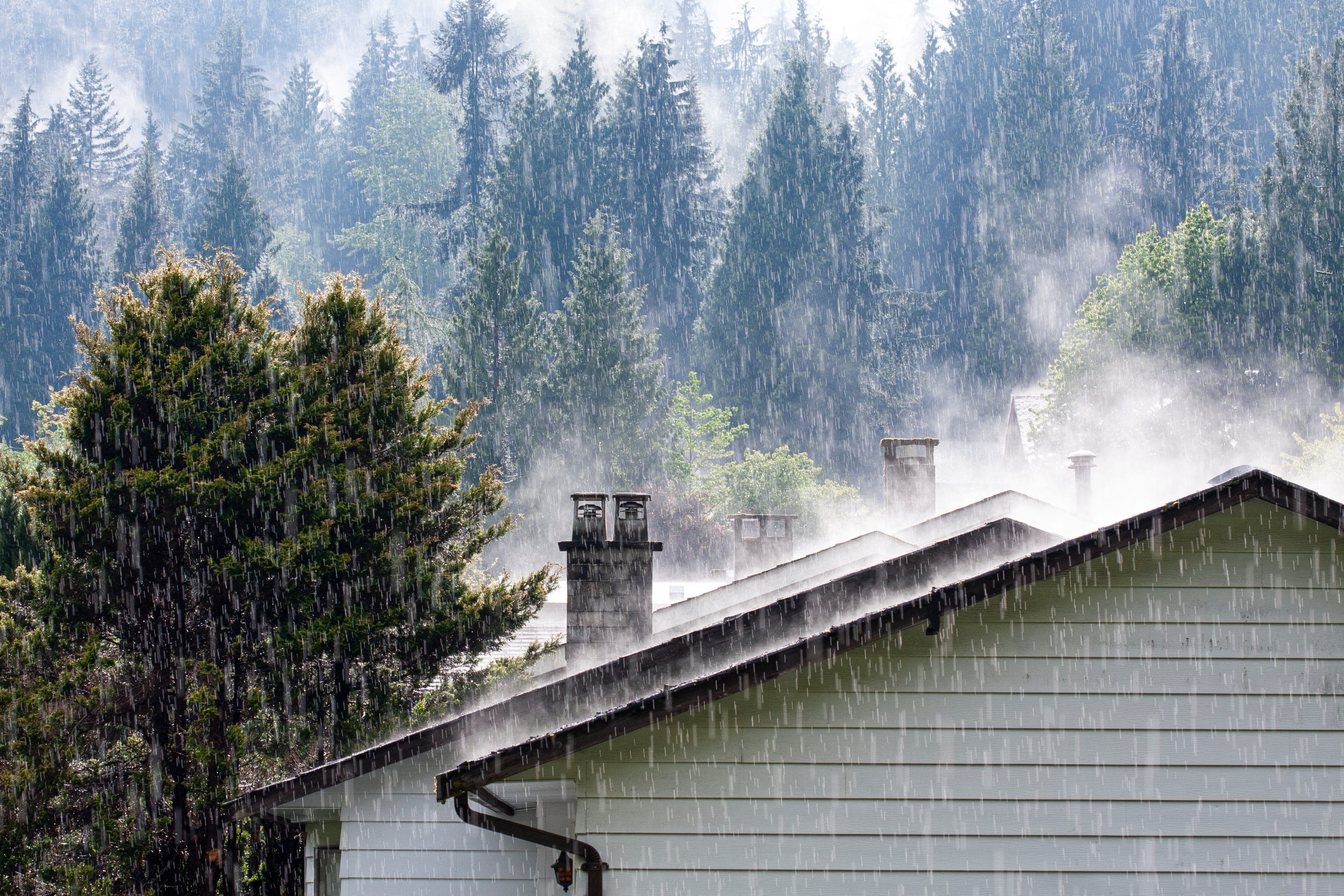
Portland makes this worse. The area averages about 43.7 inches of precipitation spread across roughly 163 wet days a year, based on federal climate normals, with December usually the wettest month. That’s a lot of chances for a small gap to turn into a stain.
So a roof leak around the chimney might be a roofing problem, a chimney problem, or both. The clues below help narrow it down.
Signs the Water Is Coming From Your Chimney
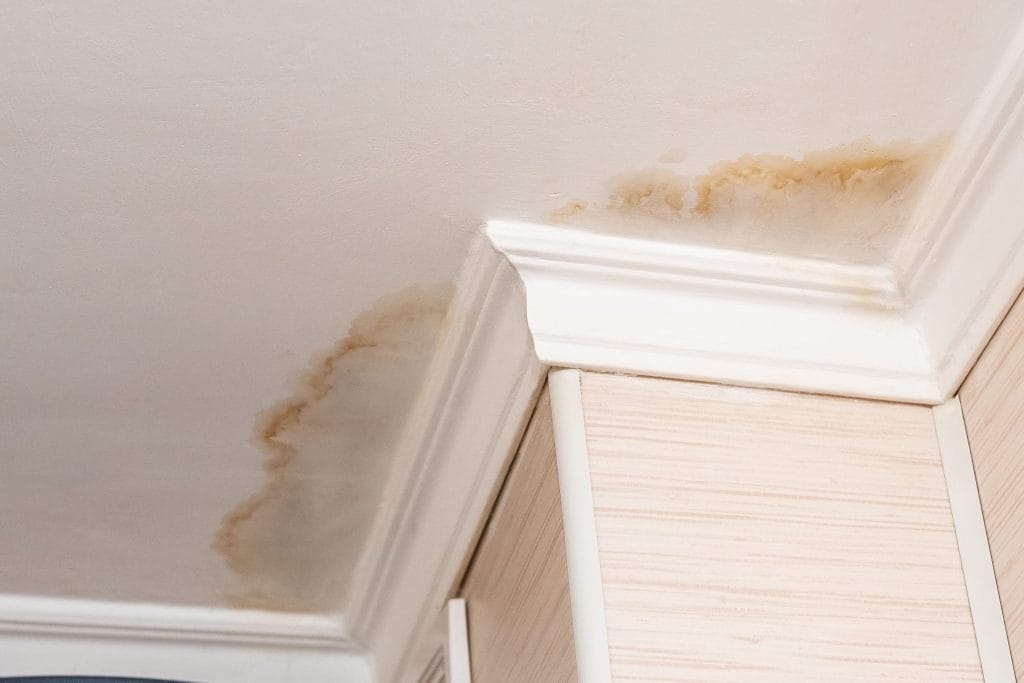
Some clues point straight at the chimney. If you notice one or more of these, the chimney is the most likely source.
- Water in the fireplace. Puddles in the firebox, wet ashes, or drips you can hear inside the fireplace mean water is getting down the flue or through the chimney walls.
- Rust on the damper or firebox parts. Metal inside the fireplace rusts when it’s getting wet regularly.
- Stains that hug the chimney. Water stains on the ceiling near the chimney, or on the wall directly against the chimney chase, usually trace back to the chimney rather than the open roof.
- White, chalky staining on brick. This residue, called efflorescence, forms when water moves through masonry and leaves minerals behind.
- A damp, musty smell from the fireplace. Wet creosote and masonry give off a distinct odor, especially after a few rainy days.
- A chimney leaking when it rains, even lightly. Roof leaks often need heavy, wind-driven rain to show up. A chimney with a missing cap or a cracked chimney crown can let water straight down the flue in an ordinary drizzle.
Read More: How Much Does Chimney Repair Cost in Portland in 2026?
Not Sure If It Can Wait?
Signs It’s More Likely a Roof Leak
Other patterns point away from the chimney and toward the roof itself.
- Stains far from the chimney. A spot in the middle of a room or along an exterior wall usually starts somewhere else on the roof.
- Leaks near vents, skylights, or roof valleys. These are common roof trouble spots that have nothing to do with masonry.
- Missing, curled, or cracked shingles. Damage you can see from the ground, especially after a windstorm, points to the roof.
- Leaks only in heavy, wind-driven storms. Water forced under shingles by wind tends to show up in big storms and stay dry the rest of the time.
- A dry firebox. If the fireplace stays completely dry even when the ceiling is wet, the water probably isn’t coming down the flue.
One exception matters a lot: a leak right where the roof meets the chimney can come from either side. That’s the flashing, and we’ll get to it shortly.
How to Find a Chimney Leak: Where to Look
You can narrow down the source a lot without ever leaving the ground. Work through these steps in order.
- Track when it leaks. Note whether it shows up in every rain or only in big storms, how soon after the rain starts, and which way the wind was blowing. These details help a pro pinpoint the entry point quickly.
- Check the fireplace. Shine a flashlight into the firebox and up toward the damper. Look for standing water, wet ashes, rust, or streaks running down the inside walls.
- Go into the attic. If you can safely reach it, look at the framing around the chimney during or right after a rain. Wet insulation, dark stains on the wood, or drips running down the outside of the chimney point to an attic leak near the chimney. Follow the water trail upward to find where it starts.
- Inspect the top of the chimney from the ground. Binoculars work well here. Look for a missing or rusted cap, a cracked chimney crown, crumbling mortar, and any metal at the base of the chimney that’s bent, rusted, or pulling away.
Please leave the roof itself to a professional. Wet shingles are slick, and a pro can safely inspect each part of the chimney up close to confirm exactly where water is getting in.
Read More: Chimney Cap Replacement Cost in Portland in 2026
Not Sure If It Can Wait?
The Gray Zone: Leaking Chimney Flashing
Chimney flashing is the metal that seals the gap where your roof meets the chimney. It’s one of the most common sources of a roof leak around a chimney, and it’s exactly where roofing and chimney work overlap.
Most chimneys use step flashing and counter flashing, two layers that work together:
- Step flashing: L-shaped pieces woven in with each course of shingles, running up the sides of the chimney.
- Counter flashing: Metal set into the chimney’s mortar joints that folds down over the step flashing to shed water.
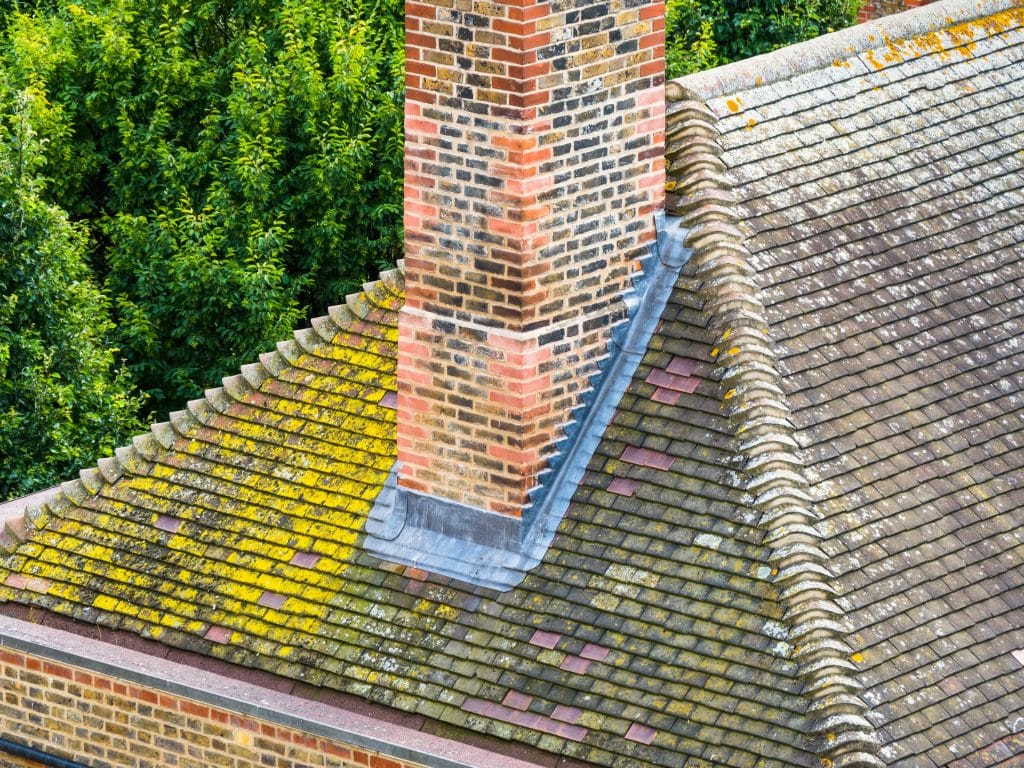
When either layer rusts, loosens, or gets sealed with caulk instead of being properly set into the masonry, water slips behind it. Leaking chimney flashing often shows up as stains on the ceiling right next to the chimney, which is why homeowners can’t tell whose problem it is.
So who should you call? A roofer is the right call for leaks out in the open roof. For leaks at the chimney itself, call a chimney specialist who handles masonry and flashing together. Counter flashing has to be cut into the mortar joints, and a bead of caulk over the gap is only a temporary fix.
What to Do Once You’ve Found the Leak
Start by limiting the damage. Put a bucket or towels under active drips, keep the damper closed, and don’t use the fireplace until the source is fixed, since wet masonry and rusted parts can make it unsafe.
Then get it inspected before you pay for a repair. At Five Star Chimney Repair, inspections are free, so you’ll know whether you need a roofer, a chimney fix, or both before spending anything.
Chimney leak repair cost depends on what failed. Here’s Five Star Chimney Repair’s published pricing for the most common fixes:
- Chimney flashing repair: $850
- Standard chimney cap: $250 (custom caps are $675)
- Chimney crown rebuild: $900
- Masonry waterproofing: $450
Fixing a leak early is almost always cheaper than waiting. Water that sits in masonry through a Portland winter can lead to crumbling mortar, damaged brick, and interior repairs on top of the original problem.
Read More: Why Do Portland Chimneys Face Unique Moisture Issues?
Book a free inspection with Five Star Chimney Repair. We’ll find where the water is getting in and walk you through your chimney leak repair options before any work starts. Call (503) 888-0260 or book online today.
Frequently Asked Questions
Who should I call for a chimney leak?
Call a chimney specialist if the water shows up in the fireplace, on the chimney walls, or where the roof meets the chimney. A roofer is the better call for leaks out in the open roof. If you’re not sure, start with a chimney inspection, since a chimney pro can tell you if the problem is actually the roof.
Does homeowners insurance cover chimney leaks?
It depends on the cause. Insurers like Allstate explain that policies generally cover leaks from sudden, covered events like wind or hail, but not damage from wear and tear or skipped maintenance. A rusted cap or slowly failing flashing usually falls in the second group, so check your policy and talk with your agent.
Do chimneys leak in heavy rain?
They can, especially when wind drives rain sideways into flashing, mortar joints, or an uncapped flue. A healthy chimney with a good cap, crown, and flashing should stay dry even in Portland’s biggest storms. If yours only leaks in heavy rain, the flashing or masonry is the most likely culprit.
Conclusion: Find the Source Before You Fix the Leak
A stain near the fireplace doesn’t automatically mean a chimney leak, and a dry-looking chimney doesn’t rule one out. Water in the firebox, rust, and stains that hug the chimney point to the chimney, while leaks far from it usually start on the roof. Flashing sits right in between.
The fastest way to stop guessing is a professional look. Five Star Chimney Repair’s CSIA-certified team offers free inspections across Portland and the surrounding communities, with the owner on every estimate, so you can fix the right problem the first time.