
Table of Contents
The first cold night of fall is usually when Portland homeowners find out their damper has a problem. It won’t budge, it won’t close all the way, or the living room has felt drafty for months, and nobody connected it to the fireplace. Chimney dampers are small parts, but they decide how much heat stays in your home and how much cold air and rain gets in.
Most older homes around Portland have a throat damper, the metal plate just above the firebox. The main alternative is a top-mount damper, also called a top-sealing damper, which closes off the chimney at the very top of the flue.
At Five Star Chimney Repair, our CSIA-certified team repairs and replaces both types in homes across Portland, Beaverton, Hillsboro, and nearby communities. Below, we’ll walk through how each damper works, how they compare, the signs yours is failing, and what repair or replacement typically costs.
Key Takeaways
- A chimney damper opens to vent smoke during a fire and closes to keep heat in and cold air, rain, and animals out when the fireplace isn’t in use.
- Throat dampers sit just above the firebox and are common in older Portland masonry fireplaces, but their metal-on-metal seal leaks air and can rust or warp over time.
- Top-sealing dampers mount at the top of the chimney, seal much tighter with a silicone gasket, and also block rain from entering the flue.
- Warning signs include a damper that sticks, won’t close fully, rattles, shows rust, or lets in cold drafts and smoke.
- Many failing throat dampers can be repaired, but chimney damper replacement or an upgrade to a top-sealing damper is often the better long-term fix.
What Is a Chimney Damper and How Does It Work?
A chimney damper is a movable plate or lid that opens and closes the flue, the passage smoke travels through on its way out of your home. When a fire is burning, the damper stays fully open, so smoke and gases can escape. When the fireplace is cold, it closes to seal the chimney off from the rest of the house.
Minnesota’s Commerce Department compares an open damper to leaving a window wide open all winter.
In Portland, a damper also has a third job. Our long, wet season means a poorly sealed chimney can let moisture, debris, and the occasional raccoon work their way down toward the firebox.
Damper work falls under our fireplace repair services, so we see the strengths and weak spots of both every week.
What Is a Throat Damper?
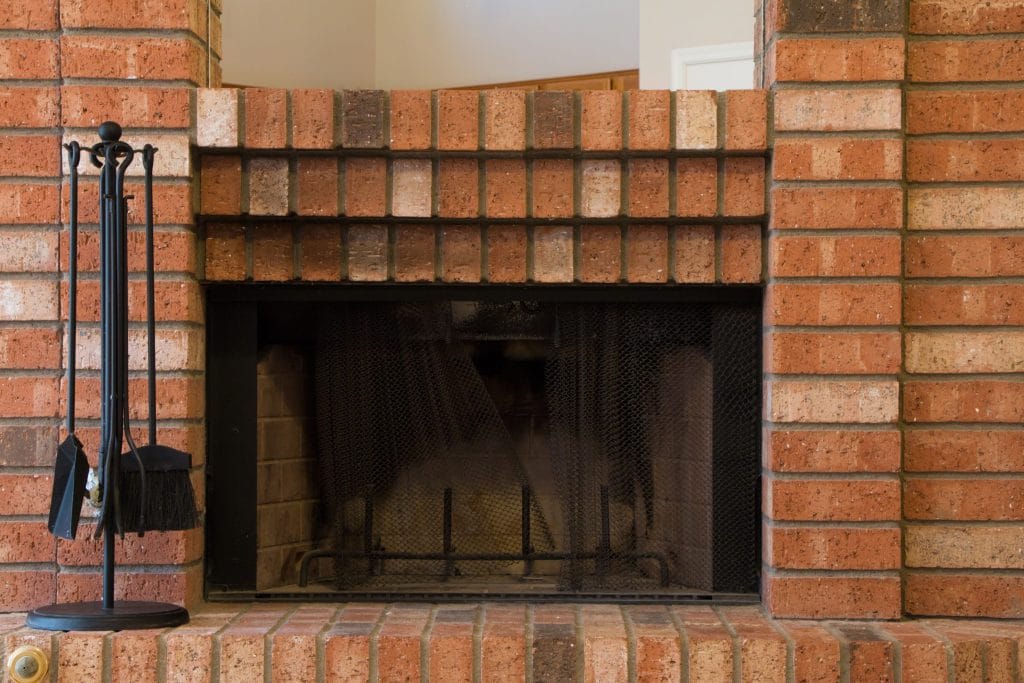
A throat damper is a cast-iron or steel plate installed in the “throat” of the fireplace, the narrow opening just above the firebox where the chimney begins. You open and close it with a handle, lever, or rotating rod inside the fireplace. Fireplace throat dampers are standard in most masonry fireplaces built before the last few decades, which describes a large share of homes in Portland’s older neighborhoods.
Pros of a throat damper:
- Easy to reach and operate from inside the fireplace
- Usually already installed, so there’s no added cost if it’s working well
- Can often be repaired rather than fully replaced
Cons of a throat damper:
- The metal-on-metal seal is never fully airtight, so heat escapes even when it’s closed
- Sits in the hottest part of the fireplace, which leads to warping and cracking over time
- Prone to rust in damp climates, especially when rain gets down an uncapped flue
- Does nothing to stop rain, debris, or animals from entering the chimney above it
Types of fireplace throat dampers include poker-style dampers you push open with a fire tool and rotary versions turned by a knob. Masonry fireplace throat dampers are built into the smoke chamber, so a warped one can be hard to remove.
Not Sure If It Can Wait?
What Is a Top-Sealing (Top-Mount) Damper?
A top-sealing damper, often called a top-mount damper, sits at the very top of the chimney instead of down near the firebox. It’s a spring-loaded lid lined with a silicone gasket that clamps down onto the flue. A stainless steel cable runs down the chimney to a handle mounted inside the fireplace, so you open and close it from below.
Pros of a top-sealing damper:
- The gasket creates a much tighter seal than a metal throat damper, so less heat escapes
- Closing the top of the flue keeps rain, debris, birds, and animals out of the chimney
- Sits away from the direct heat of the fire, so it doesn’t warp the way a throat damper can
- Can be added to a fireplace whose original throat damper is rusted, broken, or missing
Cons of a top-sealing damper:
- Higher upfront cost than repairing an existing throat damper
- Installation requires rooftop work and should be handled by a professional
- The cable and handle need occasional adjustment, and the gasket wears out after many years
For Portland homes, the weather protection is a big part of the appeal. When the damper is closed, it acts as a lid over the flue, which helps keep water away from the smoke chamber and firebox during our rainy months. A properly sized chimney cap is still worth keeping in place.
Read More: Chimney Cap Replacement Cost in Portland in 2026
Throat Damper vs. Top-Mount Damper: Key Differences
For most homeowners, the choice comes down to seal quality, weather protection, and budget. Here’s how throat dampers and top-sealing dampers compare.
- Location: Throat dampers sit just above the firebox. Top-sealing dampers sit at the top of the chimney.
- Seal: Throat dampers seal metal on metal and leak some air. Top-sealing dampers use a silicone gasket for a near-airtight seal.
- Rain and animal protection: Throat dampers offer none. Top-sealing dampers block the flue when closed.
- Heat exposure: Throat dampers take direct heat and are prone to warping. Top-sealing dampers sit well away from the fire.
- Rust risk: Throat dampers rust easily in wet climates. Top-sealing dampers are typically stainless steel and aluminum.
- Installation: Throat dampers are serviced from inside the fireplace. Top-sealing dampers require rooftop work by a professional.
- Typical damper cost (materials): Throat dampers run $150 to $250. Top-sealing dampers run $250 to $500.
Cost figures are national averages from Angi’s 2026 chimney damper cost data, before labor.
A throat damper that still seals well doesn’t need to be ripped out. But if it’s already rusted, warped, or leaking cold air, a top-sealing damper costs more upfront and solves several problems at once.
Not Sure If It Can Wait?
Signs You May Need Chimney Damper Replacement
Dampers rarely fail all at once, and fall is when the warning signs usually show up.
- It sticks or won’t move. Rust and creosote can seize a throat damper in place, open or shut.
- It won’t close all the way. A warped plate leaves a gap, and you’ll feel cold air near the fireplace even with the damper “closed.”
- Smoke comes back into the room. A damper that only opens partway can choke the draft and push smoke back toward you.
- Visible rust or flaking metal. Rust on the damper often means water is getting into the chimney from above.
- Rattling or banging in the wind. Loose or broken parts can clatter during Portland’s winter storms.
- Broken handle, chain, or cable. On a top-sealing damper, a snapped or stretched cable can leave the lid stuck open or closed.

Never light a fire if the damper won’t open. Smoke and carbon monoxide need a clear path out, and a closed damper blocks it completely.
Read More: Why Is My Fireplace Smoking?
Should You Repair or Replace Your Damper?
A lot depends on what’s actually wrong. A sticky throat damper that just needs cleaning, lubrication, or a new handle is often a quick chimney damper repair. A plate that’s cracked, rusted through, or badly warped usually isn’t worth saving.
Nationally, Angi reports that chimney damper repair runs about $100 to $225, while full replacement averages $360 and ranges from $120 to $700 depending on the damper type and the damage involved. Labor typically adds $200 to $400 on top of materials.
At Five Star Chimney Repair, damper repair or replacement averages around $300. When we quote damper replacement cost, we look at a few things:
- Whether the existing throat damper can be repaired or needs new replacement throat dampers
- The size and shape of your flue, since larger flues need larger dampers
- Whether a top-sealing damper makes more sense than replacing the throat damper
- Any related issues, like a damaged smoke chamber, crown, or cap
An inspection first means you pay for the right fix, not a guess, and at Five Star Chimney Repair, inspections are free.
Read More: What Does a Chimney Inspection Cost in Portland in 2026?
Schedule your chimney damper repair or replacement with Five Star Chimney Repair. Todd and our CSIA-certified team will inspect your damper, explain your options in plain terms, and give you a clear estimate before any work starts. Call (503) 888-0260 or book online today.
Frequently Asked Questions
How can I tell if my chimney flue is open?
With a throat damper, shine a flashlight up past the firebox. If you can see up into the flue, it’s open, and if a metal plate blocks the view, it’s closed. With a top-sealing damper, check the handle inside the fireplace or look up at the top of the chimney from your yard to see whether the lid is raised.
A noticeable draft at the opening also means it’s open.
How do I close my chimney flue?
Wait until the fire is completely out and the ashes are cool, since closing the flue early can push smoke and carbon monoxide back into your home. For a throat damper, move the handle, lever, or rotating rod to the closed position. For a top-sealing damper, pull the cable down and hook it onto its bracket inside the fireplace.
A damper that won’t seat fully likely needs repair.
Do all fireplaces have dampers?
Most wood-burning masonry fireplaces were built with a throat damper, but not all of them still have a working one. Some older Portland fireplaces have dampers that rusted away or were removed years ago. If yours is missing or beyond repair, a top-sealing damper can be added at the top of the chimney to restore that seal.
Conclusion: Choosing the Right Damper for Your Portland Chimney
Both types of chimney dampers do the same basic job, but they don’t do it equally well. A throat damper in good shape can keep working for years, while a top-sealing damper offers a tighter seal, better weather protection, and fewer rust problems once the original starts to fail.
If your damper is sticking, leaking cold air, or showing rust as burning season starts, it’s worth having it looked at before the first big storm. Five Star Chimney Repair serves Portland and the surrounding communities, with the owner on every estimate.