
Table of Contents
A brown stain on the ceiling next to your fireplace usually shows up after a week of heavy rain. In many Portland homes, the cause is the metal seal where the chimney meets the roof, and chimney flashing repair is what stops the water for good.
At Five Star Chimney Repair, flashing is one of the most common leak sources we find on chimneys across the Portland metro area. Most homeowners don’t notice it until the damage reaches the attic or the living room.
This guide covers the signs of bad chimney flashing, why our wet climate wears it out, what a proper repair involves, and what it typically costs. By the end, you’ll know whether your chimney needs a closer look.
Key Takeaways
- Chimney flashing is the metal seal between your chimney and roof, and it’s one of the most common sources of chimney leaks.
- Water stains near the chimney, rust, lifted edges, and tar or caulk patches are all signs of bad chimney flashing.
- Portland’s long rainy season puts more strain on flashing than drier climates do.
- Sealant is a temporary patch. A lasting fix means repairing or replacing the step and counter flashing.
- At Five Star Chimney Repair, the average chimney flashing repair cost is around $850.
How Chimney Flashing Works and Why It Fails
Chimney flashing repair means fixing or replacing the metal pieces that seal the gap between your chimney and roof. When flashing rusts, loosens, or pulls away from the brick, rain runs into the roof deck and walls. A proper repair restores both layers of flashing so water sheds off the roof instead of into your home.
Good chimney roof flashing has two layers. Chimney step flashing is woven into the shingles along each side of the chimney, one piece per shingle course. Chimney counter flashing is set into the mortar joints of the brick and laps down over the step flashing, so water can’t get behind it.
When either layer fails, the gap opens. Old metal rusts, sealant dries out and cracks, and the chimney and roof shift slightly at different rates over the years.
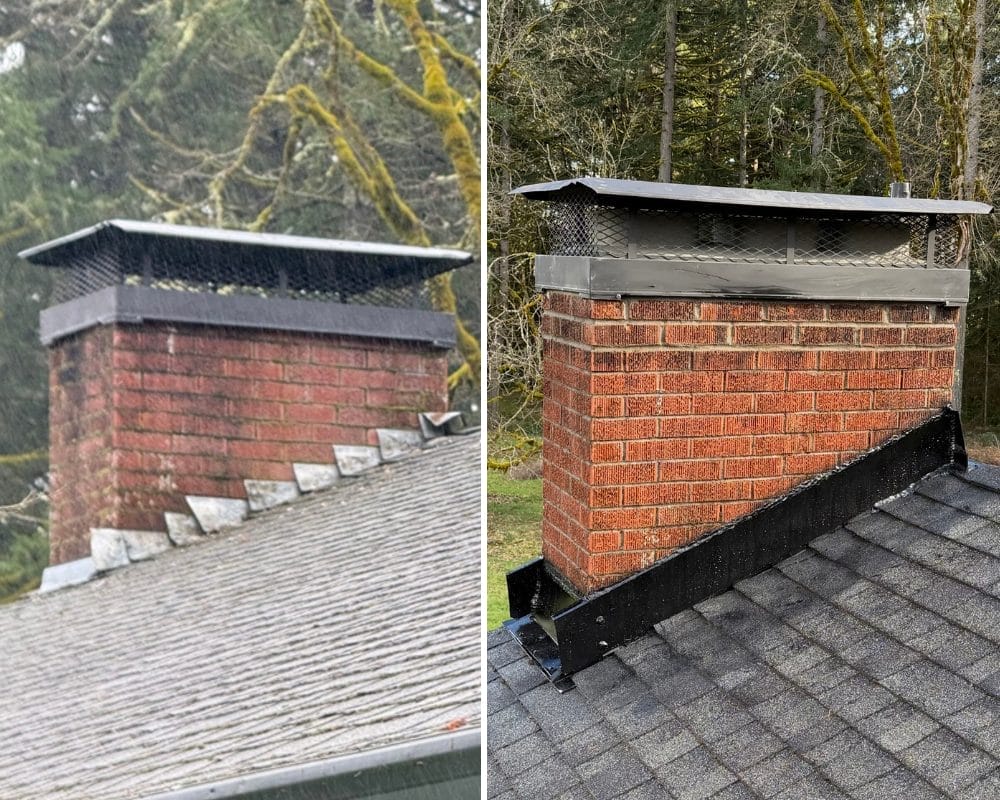
Project Blueprint: Forest Grove. This Forest Grove chimney still had older silver step flashing running up the shingles, with exposed edges along the roofline. Our crew replaced it with new flashing tied into the roof and brick. The after photo shows clean, tight lines where the chimney meets the shingles, with nothing left for rain to slip under.
Signs of Bad Chimney Flashing
Bad chimney flashing usually shows up inside first. Look for water stains on the ceiling or walls beside the chimney, damp drywall after rain, or a musty smell near the fireplace. On the roof, watch for rust, lifted or bent edges, gaps at the brick, and old tar patches.
Here’s what to check, inside and out:
- Ceiling or wall stains near the chimney. Brown or yellow rings that grow after storms are the classic sign of leaking chimney flashing.
- Damp attic wood or insulation. Water often travels along rafters before it shows up below, so check the attic around the chimney.
- Water in the fireplace. Drips or damp ash after rain can point to flashing, though a cracked crown or missing cap can cause it too.
- Rust or corrosion. Older metal flashing rusts through over time, especially where water sits.
- Lifted, bent, or loose edges. Wind and settling can pull flashing away from the brick.
- Tar, caulk, or roofing cement smeared over the joint. This usually means someone patched a leak instead of fixing the flashing.
The Chimney Safety Institute of America calls water a chimney’s biggest enemy, since leaks can damage both the inside and outside of your home. Not sure whether the water is coming from the chimney or the roof? That question trips up a lot of homeowners.
Read More: Chimney Leak or Roof Leak? How to Find Where the Water Is Coming From
Why Flashing Fails Faster in the Portland Area
Portland averages about 37 inches of precipitation a year and roughly 157 days with measurable rain, based on NOAA’s 1991 to 2020 climate normals for Portland International Airport. Most of that falls from October through March, when the flashing on your roof stays wet for weeks at a time.
That steady moisture is hard on metal and sealant. Rust spreads faster, caulk breaks down sooner, and small gaps that would stay dry in other climates let water in here.
Cold nights add to the strain. The same NOAA data shows about 32 freezing nights a year at the airport, and water that freezes in a small gap can widen it. Shade from tall Douglas firs in neighborhoods from Beaverton to Lake Oswego can also keep moss and moisture sitting against the chimney.
Read More: Why Do Portland Chimneys Face Unique Moisture Issues?
Not Sure If It Can Wait?
Repair or Replace: How Fixing Chimney Flashing Works
Whether you need a repair or a full chimney flashing replacement depends on how much of the metal is damaged. A loose section or small gap can often be repaired. Widespread rust, missing pieces, or flashing buried under layers of tar usually means replacing it.
A lot of homeowners try chimney flashing sealant first. It can buy time, but it only covers the gap. Once the sealant dries and cracks, the leak comes back, often worse than before.
Whether you call it chimney flashing or fireplace flashing repair, our crew typically follows these steps
- Inspect the flashing for rust, gaps, and separation from the brick and roof.
- Remove damaged sections and any old tar or caulk patches.
- Repair or replace the step and counter flashing so each layer overlaps correctly.
- Reseal the chimney-to-roof connection to close off every leak path.
Roof type matters too. Flashing a metal roof chimney takes different techniques than a shingle roof, and our crew works on both.
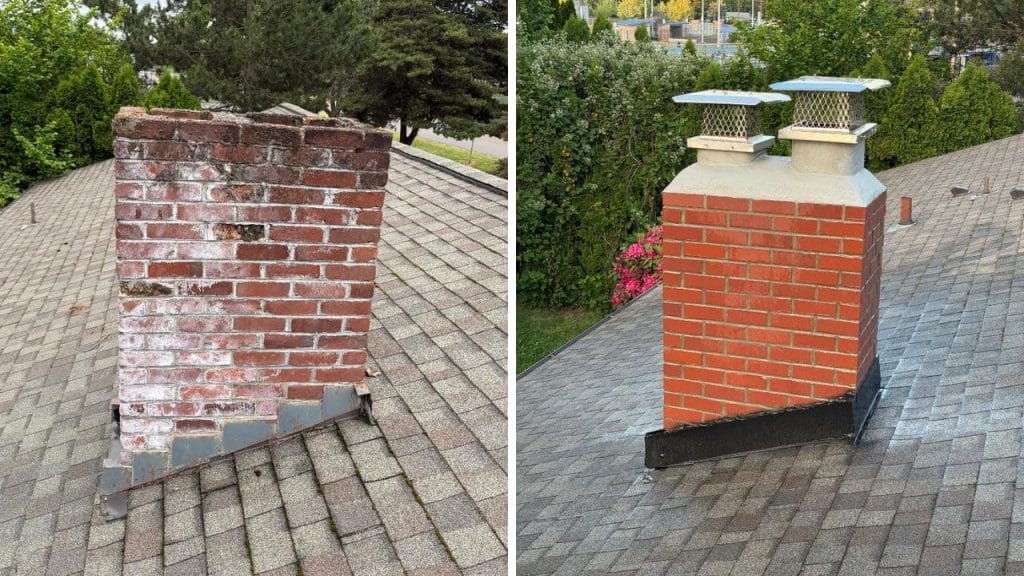
Project Blueprint: Beaverton. This Beaverton chimney had heavily weathered brick with white staining, along with flashing that needed replacing. Our crew installed new flashing, added a new crown, and added two flue caps. Because flashing often fails alongside the crown and caps, fixing all three together sealed every major water entry point. Learn more about our chimney repair in Beaverton.
What Chimney Flashing Repair Costs
At Five Star Chimney Repair, chimney flashing repair costs around $850 on average. That includes a full inspection for rust, gaps, and separation, repair or replacement of damaged sections, and resealing the chimney-to-roof connection.
Flashing is one of the most common fixes we handle as part of our chimney leak repair service. Your final cost to replace chimney flashing depends on a few factors:
- How much flashing is damaged. A few loose sections cost less than a full replacement.
- Chimney size. Wider chimneys need more flashing along each side.
- Roof type and pitch. Metal roofs and steep roofs take more time to work on safely.
- Related repairs. If the crown, cap, or mortar joints are also letting water in, fixing them at the same time is often more cost-effective than separate visits.
A leak left alone usually gets more expensive. Water that gets past failed flashing can rot roof decking, soak insulation, and stain drywall, which adds roofing and interior repairs to the bill.
Todd, our owner, is at every estimate, so you get a clear price before any work starts. We also offer a price match guarantee.
Read More: How Much Does Chimney Repair Cost in Portland in 2026?
Frequently Asked Questions
What is chimney flashing?
Chimney flashing is the metal that seals the joint where your chimney passes through the roof. It usually has two layers: step flashing tucked under the shingles and counter flashing set into the brick. Together, they direct rain away from the gap and down the roof.
Can you fix chimney flashing with caulk or sealant?
Caulk or sealant can slow a leak for a short time, but it isn’t a permanent fix. Sealant dries out and cracks, especially through a long, wet Portland winter. A lasting repair means fixing or replacing the flashing itself so each layer overlaps the way it should.
Can chimney flashing be repaired on a metal roof?
Yes. Flashing on a metal roof uses different pieces and techniques than flashing on a shingle roof, so it’s important to hire a crew with experience on both. Five Star Chimney Repair handles chimney flashing on metal and shingle roofs across the Portland area.
Conclusion: Stop the Leak Where It Starts
Failing flashing rarely fixes itself, and in a climate this wet, small gaps turn into ceiling stains, damp insulation, and rotted roof decking. Catching it early keeps the repair simple and the cost down.
If you’re searching for chimney flashing repair near me, Five Star Chimney Repair serves homeowners across Portland, Beaverton, Hillsboro, Tigard, Lake Oswego, and surrounding areas. We’re CSIA certified, have 15 years of experience, and our owner is at every estimate.
Unlike many general chimney flashing repair contractors, we focus on chimneys, so we look at the flashing, crown, cap, and masonry together.